


(see our explanation of good and bad diode array modules here!)
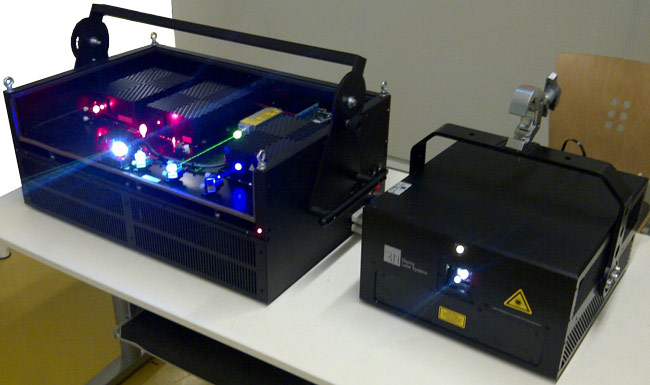
Below are two units that are to be compared:
The left unit
is a competing product with 34W RGB and CT-6215 scanners. It uses diode array solutions for red and blue color and a green OPSL.
The right unit
is a RTI NANO RGB system (up to 30W) with only OPSL sources and CT-6210HP SE scanners.
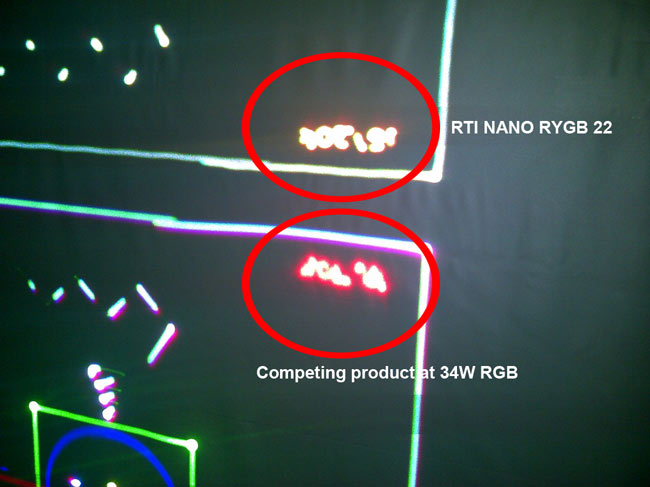
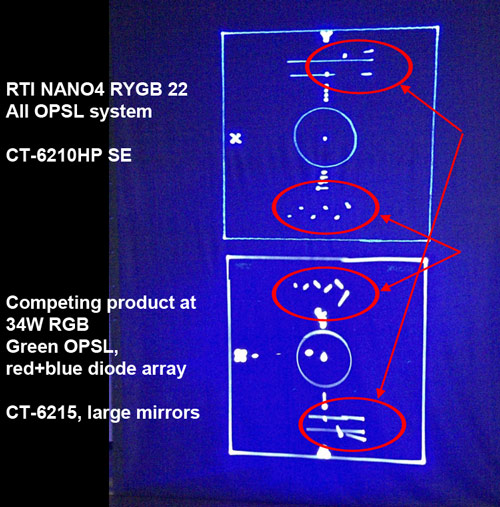
When initially projecting a test picture (testing distance: 12m), some deviances are visible:
Red laser source:
The red laser source of the competing product seems to be bigger and has a not-so-nice blur.
When looking at the NANO system, this problem is not visible: The results with RTI diode modules is very good (see below)
You can already see some scanner issues of the competing product on this picture, but this is discussed further below.
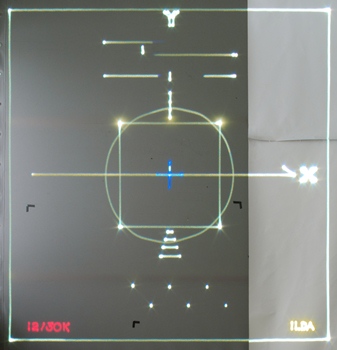 <-- NANO System with RTI red and blue
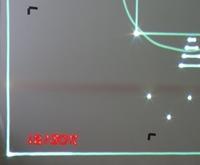 <-- Sharp and precise red beam at same size as all other colors: RTI diode array module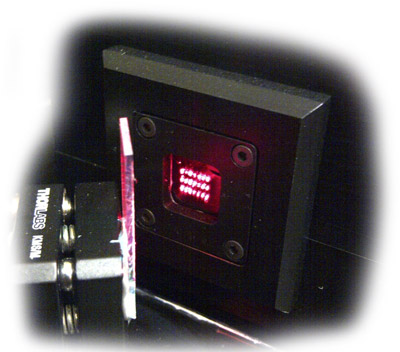
See details on diode array modules here - and why RTI diode array modules look much more precise than this one .
Here we have a look at the RTI Diode Array Module results:
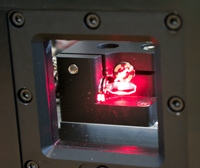
Extremely precise and very narrow aligned, they fit on the very small mirrors.
So let's have a look at the red-only test picture:
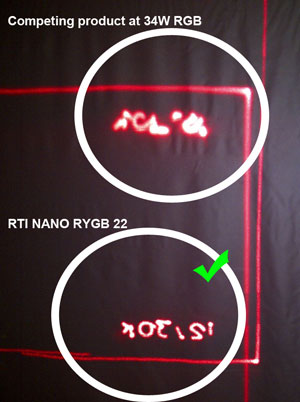
Projection size is rather small for 12m distance, but the text/numbers can still be read in the NANO projection, whereas the competing product shows more of a general blur.
This is the result with the RTI red diode array module:
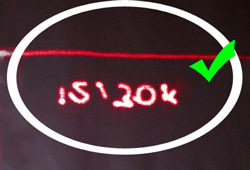
Very precise and accurate
The testing is done on a 12m projection distance. If the distance is increased - for such strong units it is normally 100m and more - it is obvious what happens to the beam: It widens up even more and thus looses power much quicker than if the beam was more accurate. This results in less power at the projection area.
Please check our calculator to compare different beam specifications: >> Divergence calculator >>
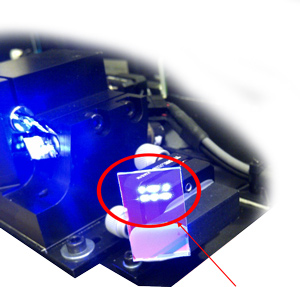
Picture 1
Picture 1 shows the dichroic filter that deflects the blue diode source to the scanner block of the competing laser system.
See details on diode array modules here - and why RTI diode array modules look much more precise than this one .
See picture 2:
The beam is even bigger than the scanner mirrors so quite some power gets lost at the scanning optics.
See details on diode array modules here - and why RTI diode array modules look much more precise than this one .
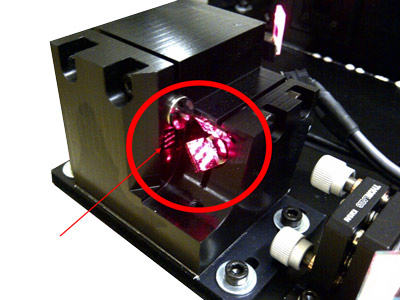
Picture 2
How does this affect the scanning quality?
Scanners - CT-6215 vs CT-6210HP SE
Another quite obvious thing is, that the scanning results of the compared unit with the CT-6215 is much worse than the results of the NANO unit - even though the general technology of the CT-6215 is superior to the CT-6210.
Two factors mainly influence the scanning quality:
The scanner driver:
The difference is the driver used: Whereas the competing product relies on own, basic standard drivers, RTI uses special advanced driver solutions that were explicitly designed for the CT-6210HP SE.
The size and weight of the scanner mirrors:
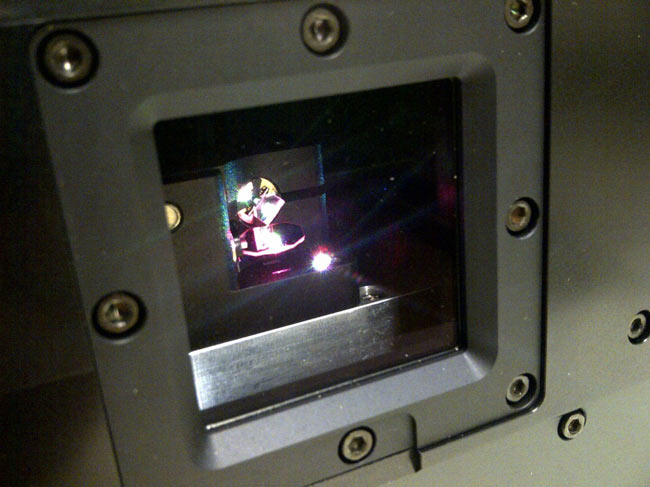
The larger the scanner mirrors that are used, the higher the inertia. This heavily affects the actual scanner accuracy and the scan speed, as higher inertia delays the actual scanner movement. That's why RTI relies on small mirros - which they can use due to the great beam quality of the laser modules.
This is how RTI solves the scanning with the very small CT-6210HP SE scanner mirrors in their NANO devices:
See details on diode array modules here- and why RTI diode array modules are so precise.
 +41-71-6778080
 +44-161-8720272





Distributed brands: